
 (6).png) 7 hours ago
2
7 hours ago
2
ARTICLE AD BOX
Bangladesh Elections: Bangladesh is voting today in the country's first Parliamentary election since a deadly 2024 uprising that marked the end of Sheikh Hasina's fifteen-year tenure.
Queues stretched outside polling stations in the capital, Dhaka, as voting in the hugely anticipated election opened in the South Asian nation of 170 million people, news agencies reported from the ground.
More than 300,000 soldiers and police are deployed countrywide, with UN experts warning ahead of voting of "growing intolerance, threats and attacks", and a "tsunami of disinformation", especially targeting millions of young first-time voters, AFP said.
Bangladesh Elections: BNP Vs Jamaat-e-Islami
Leading prime ministerial hopeful Tarique Rahman, 60, is confident his Bangladesh Nationalist Party (BNP) can regain power - but he faces a stiff challenge from the Muslim-majority country's largest Islamist party, Jamaat-e-Islami.
Jamaat chief Shafiqur Rahman, 67, has mounted a disciplined grassroots campaign, and, if victorious, the former political prisoner could lead the first Islamist-led government in constitutionally secular Bangladesh.
Opinion polls vary widely, though most give the BNP the lead, with some suggesting a knife-edge race.
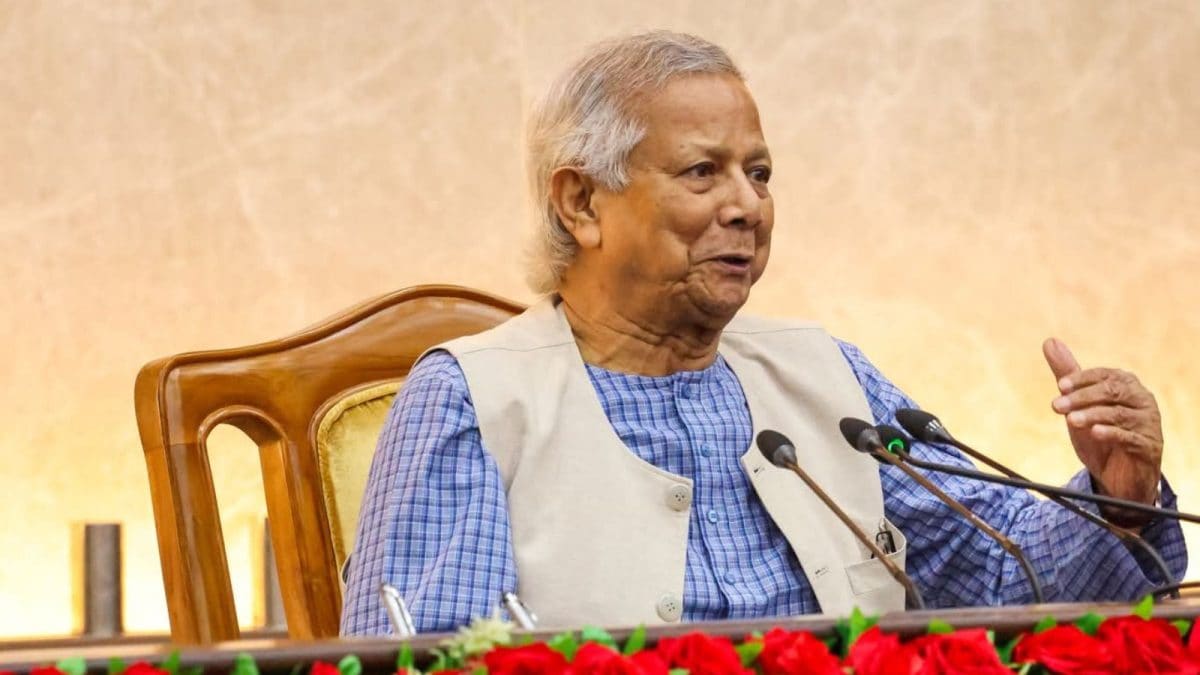
"The significance of this day is far-reaching," interim leader Muhammad Yunus, who will step down once the new government takes power, said in his address to the nation before the vote.
The 85-year-old Nobel Peace Prize winner has led the South Asian nation since Sheikh Hasina's 15-year rule ended. Hasina, 78, was sentenced to death in absentia for crimes against humanity for the bloody crackdown on protesters during her final months in power, and remains in hiding in neighbouring India.
"The crucial test for Bangladesh now will be to ensure the election is conducted fairly and impartially, and for all parties to then accept the result," said Thomas Kean, an analyst with the International Crisis Group, told news agency AFP.
Police records show that five people were killed and more than 600 were injured in political clashes during campaigning.
Bangladesh Elections: Who are the main players?
Hasina left Bangladesh after the student-led uprising in August 2024. Bangladesh’s political landscape changed dramatically in the eighteen months that followed. Her Awami League was banned from contesting elections by the interim administration of Chief Adviser Muhammad Yunus.
The main electoral battle is between the Bangladesh Nationalist Party (BNP) led by Tarique Rahman and a newly formed 11-party alliance, officially known as the ‘Like-minded 11 Parties.’ The alliance is led by the Bangladesh Jamaat-e-Islami and the National Citizen Party.
Tarique Rahman, son of former Bangladeshi prime minister Khaleda Zia, headed the BNP’s campaign. Rahman, opinion polls suggest, could be the country’s next prime minister.
Rahman’s mother, Khaleda Zia, passed away in December 2025. Rahman assumed the role of BNP chairperson upon returning to Bangladesh from exile in London. Zia lived in self-imposed exile for 17 years to avoid numerous criminal investigations opened against him in Bangladesh during Hasina's rule. All cases against him have been dropped since the Awami League's ouster from power.
BNP is a coalition of 10 parties. It's being challenged by the Jamaat-e-Islami-led alliance of 11 parties, including the National Citizen Party (NCP), headed by students who were prominent in the 2024 anti-Hasina protests.
The Jamaat campaign is being led by 67-year-old Shafiqur Rahman, who has pledged to protect democratic rights if elected.
Bangladesh Elections: Stance of parties on India
The BNP has had "prickly engagement" with India in the past, according to the Institute of South Asian Studies (ISAS-NUS), Singapore.
Late Khaleda Zia ruled Bangladesh three times — between 1991-1996, briefly in 1996, and again from 2001 to 2006. Khaleda, unlike Hasina, framed India through a more sceptical lens, ISAS says.
"The BNP’s rhetoric frequently depicted Indian initiatives as hegemonic and unequal, opposing transit arrangements and highlighting unresolved disputes over water and trade," the ISAS claimed.
Jamaat-e-Islami, the Islamist party, is known for its anti-India stand in the past.
Its chief, or Ameer, Dr Shafiqur Rahman, was quoted by Dhaka Tribune recently as saying, “On 12 February, the people will show a red card to the slaves of hegemony...”
Many saw it as an indirect message for India.
Jamaat's ally, the National Citizen Party (NCP), also showed an anti-India stance during the 2024 uprising against Hasina.
Bangladesh Elections: What is the majority mark?
Voters will elect 299 lawmakers directly, with a further 50 women chosen from party lists. The election in one seat has been cancelled due to the death of a candidate.
The Bangladesh Parliament, or Jatiya Sangsad, has 350 seats, including 300 directly elected seats and 50 reserved for women.
The significance of this day is far-reaching.
To form a government, a party or coalition needs a simple majority of directly elected seats — at least 151 seats out of 300. The 50 women’s reserved seats are allocated after the election results, based on a party’s share of the 300. These don’t affect the initial threshold for forming the government.
Members of Parliament serve five-year terms.






 English (US) ·