
 2 weeks ago
2
2 weeks ago
2
ARTICLE AD BOX
Last Updated:May 29, 2026, 18:45 IST
Antoine Moses sets Guinness World Record by planting 47460 mangrove saplings in 24 hours in Mombasa, highlighting mangroves role in climate, coastal protection and biodiversity.


Antoine Moses sets Guinness World Record by planting 47460 mangrove saplings in 24 hours in Mombasa, Kenya. (Image: IG/ AFP)
Canadian environmentalist Antoine Moses has set a new Guinness World Record by planting 47,460 mangrove saplings in just 24 hours along the coast of Mombasa, Kenya, drawing global attention to one of nature’s most powerful tools in the fight against climate change.
Moses spent nearly an entire day working through muddy coastal terrain, planting mangrove propagules across restoration sites affected by environmental degradation. The feat surpassed his own previous world record and was carried out in partnership with local conservation groups and environmental monitoring platform Veritree.
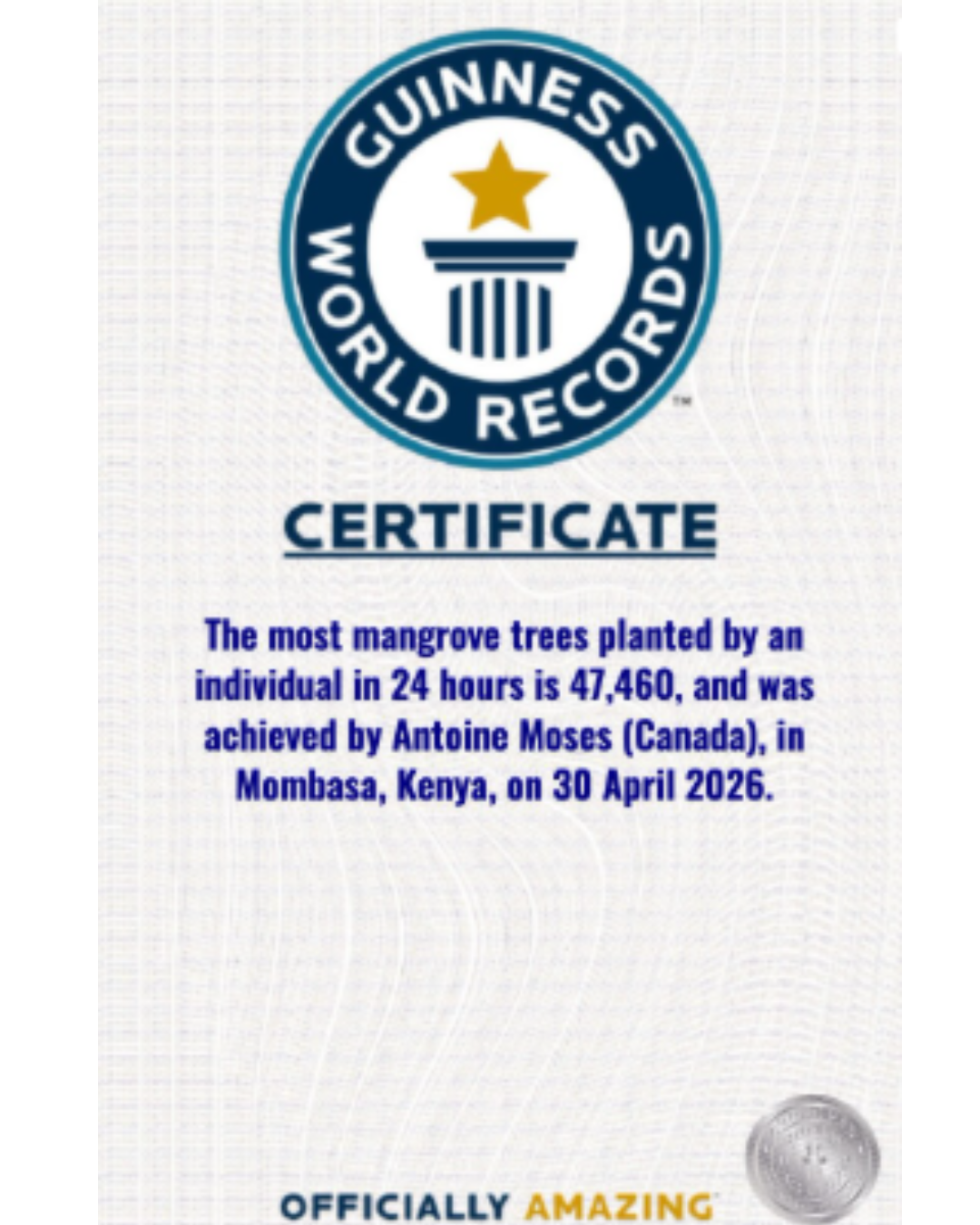
While the record itself is impressive, it has also sparked renewed interest in mangroves, often referred to by scientists as “super trees" because of their extraordinary environmental benefits.
Why Are Mangroves Called ‘Super Trees’?
Mangroves are unique trees that grow in coastal areas where land meets the sea. Unlike most plants, they can survive in salty water and harsh environmental conditions.
Their complex root systems help stabilise coastlines, reduce erosion and create natural barriers against storms, cyclones and flooding.
Nature’s Carbon-Capturing Champions
Mangroves are among the most effective ecosystems on Earth when it comes to storing carbon dioxide.
Scientists estimate that mangrove forests can capture and store significantly more carbon per hectare than many tropical forests. Much of this carbon remains trapped in coastal soils for decades or even centuries, helping reduce greenhouse gas concentrations in the atmosphere.
Because of this ability, mangroves are increasingly viewed as a critical weapon against global warming.
Protecting Communities From Extreme Weather
As climate change drives more frequent and intense storms, mangroves serve as natural coastal defence systems.
Their dense root networks absorb wave energy and reduce the impact of storm surges, helping protect homes, infrastructure and communities along vulnerable coastlines.
Research following major cyclones and tsunamis has repeatedly shown that regions with healthy mangrove cover often suffer less damage than areas where the forests have been destroyed.
A Lifeline For Marine Life
Mangroves also play a vital role in supporting marine ecosystems.
Their roots create sheltered habitats that serve as breeding grounds and nurseries for fish, crabs, shrimp and numerous other species. Many fishing communities around the world depend on healthy mangrove ecosystems for their livelihoods.
The forests also support birds, reptiles and mammals, making them some of the most biodiverse ecosystems on the planet.
Why Mangrove Restoration Matters
Despite their importance, mangrove forests have been disappearing due to coastal development, pollution, aquaculture projects and deforestation.
Environmental groups warn that the loss of mangroves not only weakens natural coastal protection but also releases large amounts of stored carbon back into the atmosphere.
As a result, governments and conservation organisations are increasingly investing in large-scale mangrove restoration projects across Asia, Africa and Latin America.
Moses’ Record-Breaking Mission
According to Guinness World Records, Moses said the challenge was about more than setting a new record. He hoped the project would raise awareness about ecosystem restoration and inspire greater action against climate change.
The mangroves planted during the event are being digitally tracked and monitored to ensure they survive and contribute to long-term environmental restoration efforts.
The Bigger Picture
Planting 47,460 mangroves in a single day is a remarkable achievement. But perhaps more importantly, it highlights the growing recognition that nature-based solutions will play a major role in addressing climate change.
As sea levels rise and extreme weather events become more common, these so-called “super trees" are becoming increasingly valuable for protecting coastlines, supporting biodiversity and helping the planet absorb carbon emissions.
The world-record effort may have lasted only 24 hours, but its environmental impact could endure for generations.
Handpicked stories, in your inbox
A newsletter with the best of our journalism
News world Canadian Man Plants 47,000 Mangroves In 24 Hours In Kenya. Here's Why These ‘Super Trees’ Matter
Disclaimer: Comments reflect users’ views, not News18’s. Please keep discussions respectful and constructive. Abusive, defamatory, or illegal comments will be removed. News18 may disable any comment at its discretion. By posting, you agree to our Terms of Use and Privacy Policy.
Read More






 English (US) ·