
 (6).png) 2 hours ago
2
2 hours ago
2
ARTICLE AD BOX

Summary
Passage of vessels likely in a staggered fashion. Indian ports on the western coast have been advised to keep anchorage space available for these tankers so that oil and gas be unloaded quickly
The Indian government is in talks with Iranian authorities for the safe passage of six India-bound vessels carrying liquefied petroleum gas (LPG) and two crude oil carriers to help tide over the short-term crunch, two people aware of the matter said.
The LPG tankers carry around 270,000 tonnes of cooking gas, enough to fill around 1.9 million domestic cooking gas cylinders of 14.2 kg capacity), equivalent to three days of consumption. The two countries are working on a priority schedule for the staggered passage of all eight vessels, the people said on the condition of anonymity.
The talks have been "positive," with the passage to be planned in a staggered manner, one of the two people cited above said. He added that Indian ports on the western coast have been advised to keep anchorage space available for these tankers so that oil and gas be unloaded quickly. The vessels are currently on the western side of the Strait of Hormuz, anchored near the ports of Qatar and the UAE.
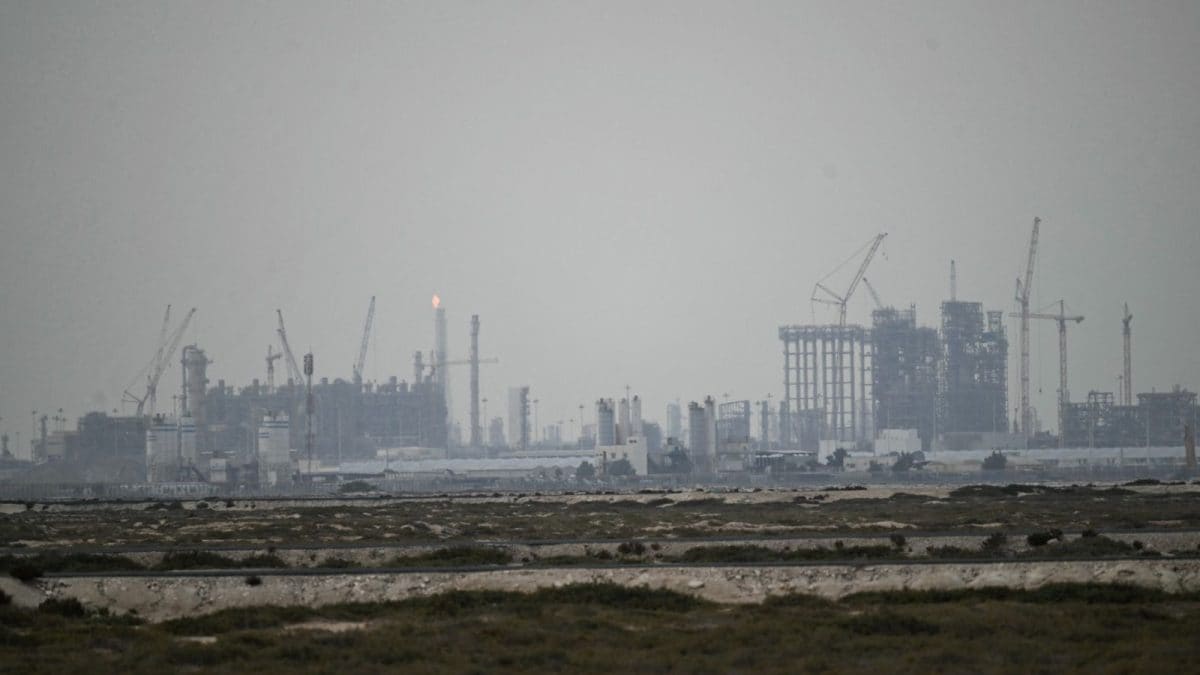
A total of 22 Indian-flagged vessels are stranded on the western side of the Strait of Hormuz. Of these, six are carrying LPG, four are transporting crude oil, and one vessel is transporting liquefied natural gas (LNG). West Asia and the Strait of Hormuz are key for India's energy security, with about 90% of India's LPG imports and 50% of India's crude imports dependent on this region.
"The talks have been positive so far. The priority currently is to ensure safe passage for six LPG tankers and two crude carriers. The vessels are expected to be allowed in batches of one or two ships at a time," the second person said.
The intervention comes at a time when India has prioritized gas for household use. The scarcity has led to a scramble for electric stoves and forced many eateries to trim operations. While the government has assured enough stocks, many cities have seen panic booking and long queues for LPG cylinders. The scarcity has also prompted the government to look for alternative sources in a wide range of countries from Morocco to Belarus. Meanwhile, refiners are ramping up LPG production, forgoing other downstream products, including petrochemicals.
Queries mailed to the ministries of ports, shipping and waterways, external affairs, petroleum and natural gas and Iranian embassy in New Delhi remained unanswered.
So far, two Indian-flagged LPG carriers have crossed the strait. Shivalik arrived at the Mundra port on Monday evening, while Nanda Devi reached Kandla port on Tuesday. The second person said that crude oil tanker Jag Laadki may soon reach Indian ports, completing its journey from the UAE.
While the government is using diplomatic channels to see that all Indian flagged stranded in Persian gulf reaches Indian shores, experts cautioned about the risks.
“Amid reports of LPG carriers being stranded in the Strait of Hormuz, ensuring safe passage for LPG cargoes bound for Indian shores remains critical, especially given the Iran government's indication that non-US and non-Israeli vessels will be permitted transit and the strength of India-Iran diplomatic engagement. However, as the route continues to pass through an active conflict zone, any maritime incident could materially disrupt supplies and pose operational challenges for deliveries in India,” said Sourav Mitra, partner, Grant Thornton Bharat.
“India’s crude and gas ships need a safe passage from Strait of Hormuz, both for our energy requirement and the safety of crew on board such ships. Many ships bringing crude and gas from this region are Indian-flagged and hence, they have all Indian seafarers. Despite alternative sources being tapped by the country, this region will continue to be an important supply hub for our energy needs. Diplomatic efforts have started to bear fruit, and I am extremely hopeful that gradually more ships can safely transit Strait of Hormuz,” said Rajiv Jalota, former chairman of Mumbai Port Authority and Indian Ports Association, and a maritime sector expert.
While the shipping ministry is aiding government efforts to bring back stranded ships, it has also directed all major ports to facilitate anchorage and storage of containers affected due to conflict with minimal port-related duties.
Earlier, external affairs ministry spokesperson Randhir Jaiswal had said that the prime minister, external affairs minister and Indian missions were actively engaging with counterparts to underline India’s priorities, particularly energy security and safe maritime transit. On Tuesday too, Jaiswal reiterated that India is in talks with all the key countries including Iran and the US.
In response to a question on whether Iran has sought its vessels in India in exchange for the safe passage of India-flagged ships through the Strait of Hormuz, Jaiswal said there has been no such discussion. "I would also like to say that in any case these vessels are not Iranian, neither there are any Iranian crew on these vessels. Also, I would like to say that they are not tankers, they are vessels," Jaiswal said.
Reports earlier said that Iran has asked India to release three tankers seized in February, as part of talks seeking the safe passage of India‑bound vessels out of the Persian Gulf through the Strait of Hormuz.






 English (US) ·