
 (7).png) 4 months ago
13
4 months ago
13
ARTICLE AD BOX
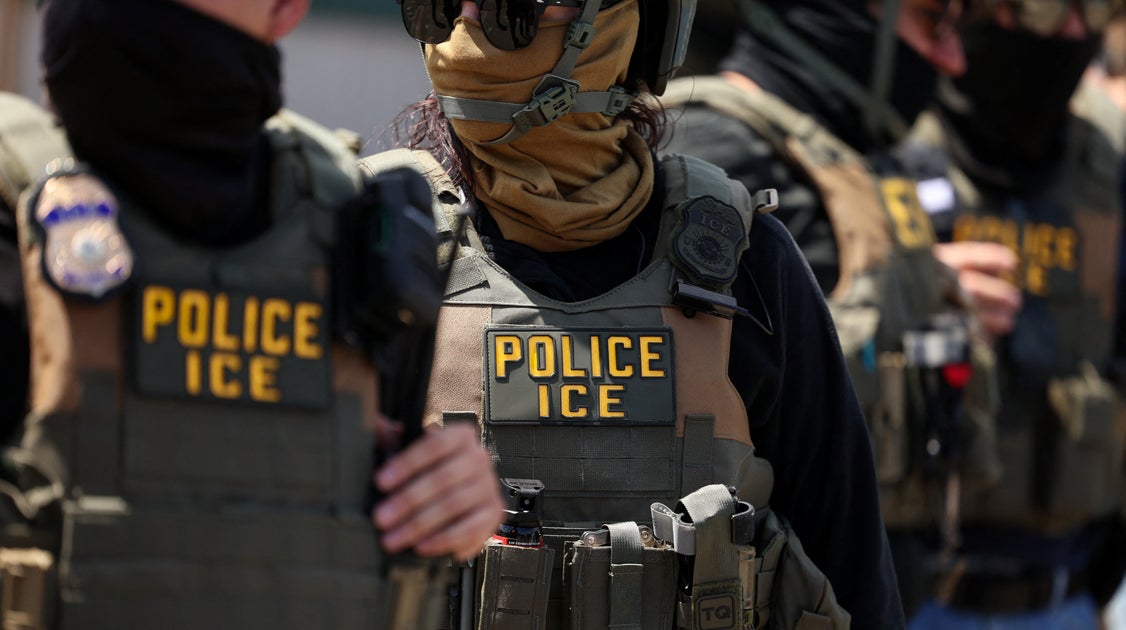
Minnesota officials urged a US judge to temporarily halt the Trump administration’s surge of immigration enforcement in the state, citing fatal shootings by federal agents and other violent encounters since thousands of officers were deployed late last year.
US District Judge Katherine Menendez didn’t rule during the hearing in Minneapolis on Monday and didn’t say when she intends to announce a decision.
Menendez told lawyers that she was wrestling with the broad scope of the state’s request to pause Operation Metro Surge and order officers off the street while the legal fight continues. US officials have “a lot of power” to carry out immigration laws, she noted.
“Crediting what you say 100%, one of the things I’m struggling with is that not all crises have a fix from a district court injunction,” Menendez told a lawyer for Minnesota. “There are other things that are supposed to rein in this kind of conduct.”
But the judge also questioned the Justice Department’s assertion that the goal of the surge isn’t to force Minnesota to change its policies limiting cooperation with federal immigration enforcement, highlighting a disconnect between US officials’ public statements and the government’s arguments in court.
Minnesota is alleging that the deployment of officers from Immigration and Customs Enforcement and other federal agencies unconstitutionally interferes with the state’s authority to manage its affairs and is hurting the safety and health of residents. The hearing followed a deadly weekend in Minneapolis, when Alex Pretti, a 37-year-old intensive care unit nurse and US citizen, was shot and killed by one or more federal agents while being restrained on the ground.
“Minnesota should not have to withstand another month, another week or another single day of the unlawful and unchecked invasion and occupation by thousands of federal agents,” Lindsey Middlecamp, a lawyer with the Minnesota attorney general’s office, told the judge.
The state accused the Trump administration of using the deployment to illegally coerce cooperation with federal immigration enforcement and compliance with demands for voter records and information about low-income households that receive food aid and other public benefits.
Middlecamp described a Jan. 24 letter that Attorney General Pam Bondi sent to Minnesota Governor Tim Walz laying out those requests as a “ransom note.”
Menendez asked Justice Department lawyer Brantley Mayers how she should interpret Bondi’s letter, saying it “really strongly suggests” the administration would pull back if the state complied. The judge said she had “concerns” that the letter dealt with issues that are the subject of other legal fights. The Justice Department currently has a lawsuit against Minnesota’s so-called “sanctuary” policies limiting cooperation with federal immigration agencies pending before a different federal judge.
“Is the executive trying to achieve a goal through force that it cannot achieve through the courts?” the judge asked.
Mayers replied that the government is trying to enforce federal immigration laws and that there isn’t evidence agents are on the ground “for another reason.” Operation Metro Surge addresses problems caused by Minnesota’s “sanctuary” policies, he said, but disputed that the deployment violates the Constitution’s 10th Amendment prohibition against the federal government intruding on state authority.
Mayers also argued that Minnesota’s request for an order halting the surge would be too difficult to carry out. Menendez asked for details about the size and scope of the deployment, but Mayers said he didn’t have fresh numbers on hand. The judge asked for that information after the hearing.
Menendez asked Minnesota’s lawyer to identify a broad principle for when the federal government’s actions crossed the line and became unlawful. She posed hypothetical questions about whether the state could press a similar constitutional claim if there were only a few dozen federal agents engaging in allegedly illegal conduct, or if there were thousands of agents on the streets who were fully compliant with the law.
Brian Carter, another lawyer with the Minnesota attorney general’s office, replied that the size of the deployment did matter, but that even if all of the officers were behaving “like Boy Scouts,” the state still could claim that the federal presence amounted to unlawful coercion. He argued that details about where the line was between legal and unlawful actions aren’t as important because the Trump administration is “so far beyond the pale of legality.”
Menendez questioned why it wouldn’t be better to address accusations of unlawful conduct by federal agents on an issue-by-issue basis, as opposed to the state’s sweeping approach. The judge is already presiding over a separate lawsuit alleging US officers are using excessive force against protesters. Her order imposing restrictions on agents has been temporarily paused by an appeals court.
When Carter mentioned reports of an internal government memo about warrantless home entries by immigration agents, Menendez pointed out there wasn’t a lawsuit specifically challenging that so far.
“I can’t be the global keeper of all of the things here,” the judge said.
The case is Minnesota v. Noem, 26-cv-190, US District Court, District of Minnesota .
©2026 Bloomberg L.P.
This article was generated from an automated news agency feed without modifications to text.




 English (US) ·