
 1 hour ago
1
1 hour ago
1
ARTICLE AD BOX
Last Updated:May 14, 2026, 08:03 IST
A US Senate hearing sounded alarm over China’s rapidly expanding nuclear arsenal just ahead of Donald Trump's visit to Beijing.


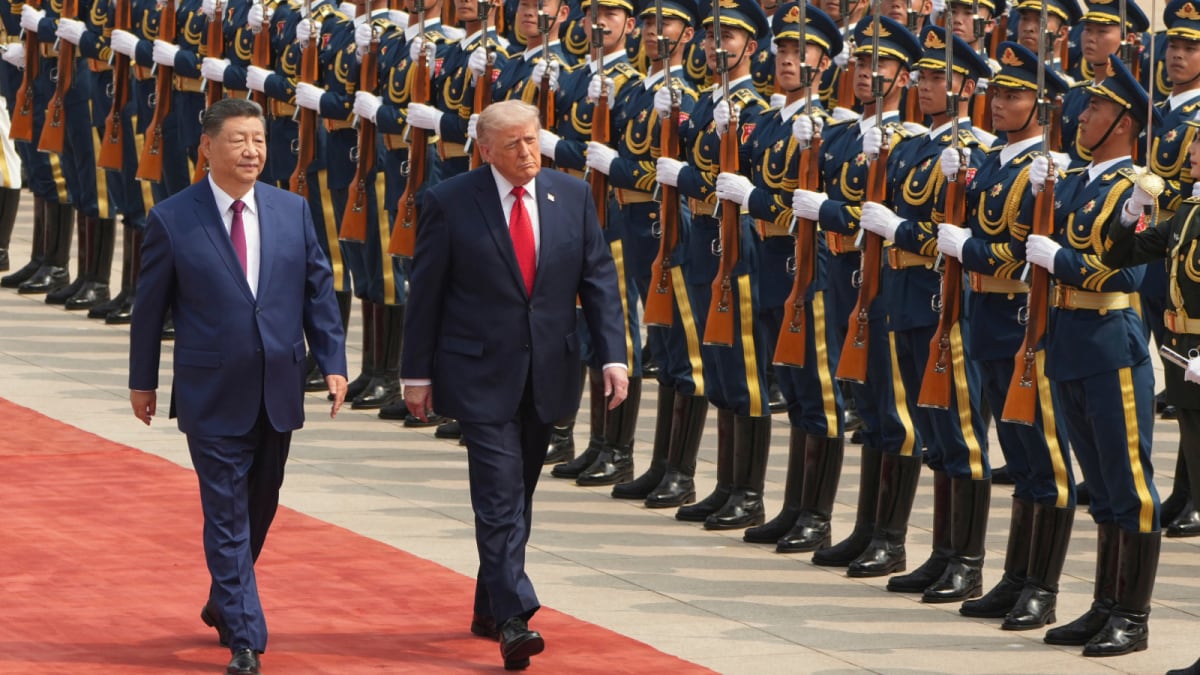
US President Donald Trump participates in a welcome ceremony with China's President Xi Jinping at the Great Hall of the People. (Image: AP)
As US President Donald Trump began his high-stakes visit to Beijing for talks with Chinese President Xi Jinping, Washington sent a parallel message that reflected the growing strategic mistrust between the world’s two biggest powers. Hours before the summit began, a US Senate hearing sounded alarm over China’s rapidly expanding nuclear arsenal, warning that Beijing was no longer following its old doctrine of maintaining only a limited nuclear deterrent.
Trump’s China visit comes at a particularly sensitive moment. The US and China are trying to stabilise ties strained by trade disputes, Taiwan tensions, the Iran war, artificial intelligence rivalry and semiconductor restrictions. While both sides are publicly projecting cooperation and economic engagement, the underlying strategic competition has only intensified. Nuclear weapons, once a relatively secondary issue in US-China relations, are now moving to the centre of Washington’s security concerns.
American lawmakers and strategic experts warned that China’s military modernisation is unfolding at a pace not seen before and could fundamentally alter the global balance of power. More than just the number of warheads that China possesses, the concerns are about the scale, sophistication and intent behind Beijing’s nuclear build-up.
Why The US Is Concerned About China’s Nuclear Might
For decades, China maintained what it called a policy of “minimum deterrence", keeping a relatively small nuclear arsenal designed mainly to discourage an attack rather than compete directly with the United States or Russia.
That appears to be changing. According to a report in South China Morning Post, US officials and strategic analysts now believe China is moving towards a far more expansive nuclear posture. According to Pentagon estimates cited in recent American assessments, China’s nuclear warhead stockpile has grown sharply in recent years and could continue expanding rapidly through the next decade. Washington fears Beijing may ultimately seek nuclear parity with the US and Russia, ending the era when China remained a distant third nuclear power.
At the Senate hearing, concerns were raised over what lawmakers described as China’s “unprecedented nuclear breakout". American officials pointed to evidence that Beijing is building new missile silos, expanding submarine-based nuclear forces and modernising long-range bombers capable of carrying nuclear weapons.
The Missile Silos That Alarmed Washington
One of the biggest triggers for American concern has been the discovery of vast fields of missile silos in remote parts of China.
Satellite imagery over the past few years revealed hundreds of new silo sites under construction in western China. While Beijing has not officially explained the scale of the construction, US defence experts interpret it as evidence that China is preparing for a much larger and more survivable nuclear force.
Missile silos are hardened underground launch facilities designed to protect intercontinental ballistic missiles from enemy strikes. By building large numbers of them, China could ensure that even if some sites are destroyed in a conflict, enough missiles survive to retaliate. This is central to what nuclear strategists call “second-strike capability" — the ability to launch nuclear retaliation even after absorbing an attack.
Washington believes that this significantly complicates deterrence calculations and raises the risk of a more intense nuclear competition between the major powers.
China’s Nuclear Triad Is Expanding
The US is also watching China’s push to strengthen all three legs of what is known as a nuclear triad — land-based missiles, nuclear submarines and strategic bombers.
China has invested heavily in modern ballistic missile submarines that can patrol far from its shores and launch nuclear missiles from the sea. It is also developing advanced bombers with longer operational range and stealth features. Combined with land-based missiles, this creates a more flexible and resilient nuclear force.
American defence planners worry that such capabilities give Beijing greater confidence during crises, especially around Taiwan or the South China Sea. The fear in Washington is that a stronger Chinese nuclear shield could deter US intervention in a future regional conflict.
Concerns Beyond Numbers
The American anxiety is not only about how many nuclear weapons China possesses. US officials are increasingly worried about opacity.
Unlike the US and Russia, which have decades-old arms control mechanisms and communication systems, China remains far more secretive about its nuclear doctrine, deployment patterns and long-term goals. There are also growing allegations in Washington that China may be conducting covert low-yield nuclear testing activities, something Beijing denies.
Several US lawmakers at the Senate hearing warned that the world may now be entering a new three-way nuclear competition involving the United States, Russia and China. Such a scenario could make traditional arms control frameworks obsolete and create a far more unstable global security environment.
Why This Matters During Trump’s China Visit
The timing of the Senate warning is significant. Trump’s visit is officially focused on stabilising economic ties, managing tensions over Taiwan, discussing artificial intelligence and addressing fallout from the Iran conflict. But the nuclear issue looms heavily in the background.
The US administration has increasingly framed China as a long-term strategic challenger capable of matching American military power. Beijing, meanwhile, argues that its military modernisation is defensive and accuses Washington of trying to contain China’s rise.
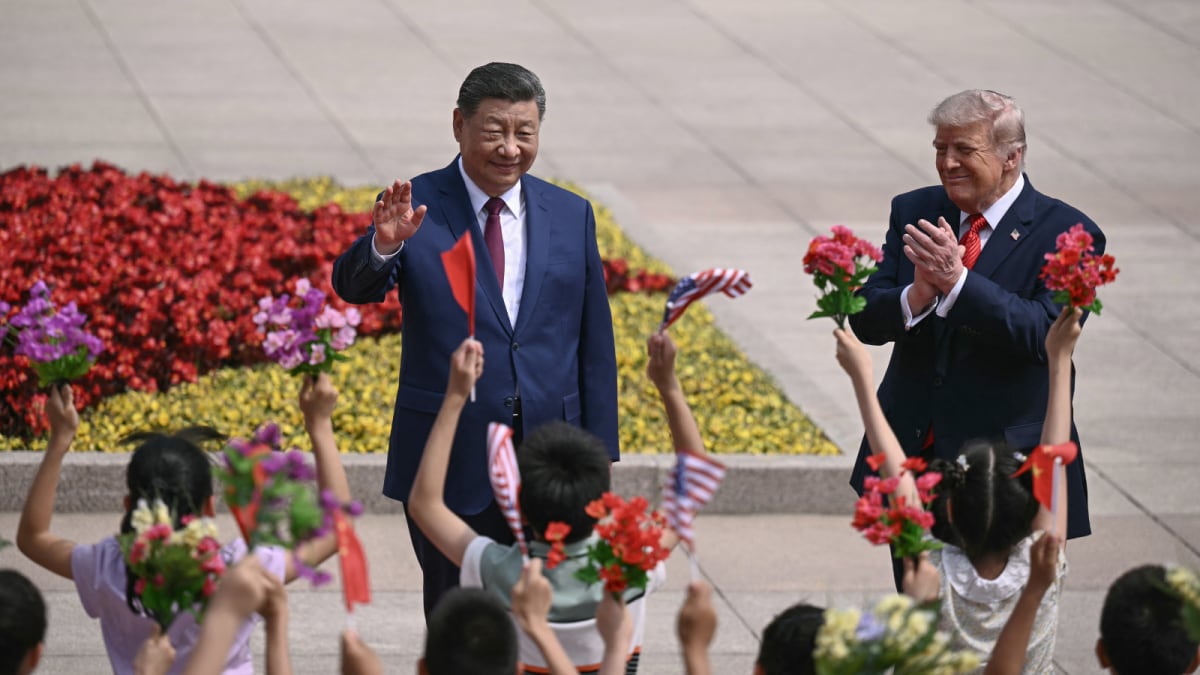
That widening mistrust explains why even as Trump and Xi exchange diplomatic courtesies in Beijing, American lawmakers are warning that the strategic rivalry between the two nations is entering a far more dangerous phase — one where nuclear weapons are becoming central once again.
Handpicked stories, in your inbox
A newsletter with the best of our journalism
News world Nuclear Shadow Over Trump-Xi Meet? Why China’s Missile Silos Are Ringing Alarm Bells In US
Disclaimer: Comments reflect users’ views, not News18’s. Please keep discussions respectful and constructive. Abusive, defamatory, or illegal comments will be removed. News18 may disable any comment at its discretion. By posting, you agree to our Terms of Use and Privacy Policy.
Read More




 English (US) ·