
 (6).png) 14 hours ago
1
14 hours ago
1
ARTICLE AD BOX
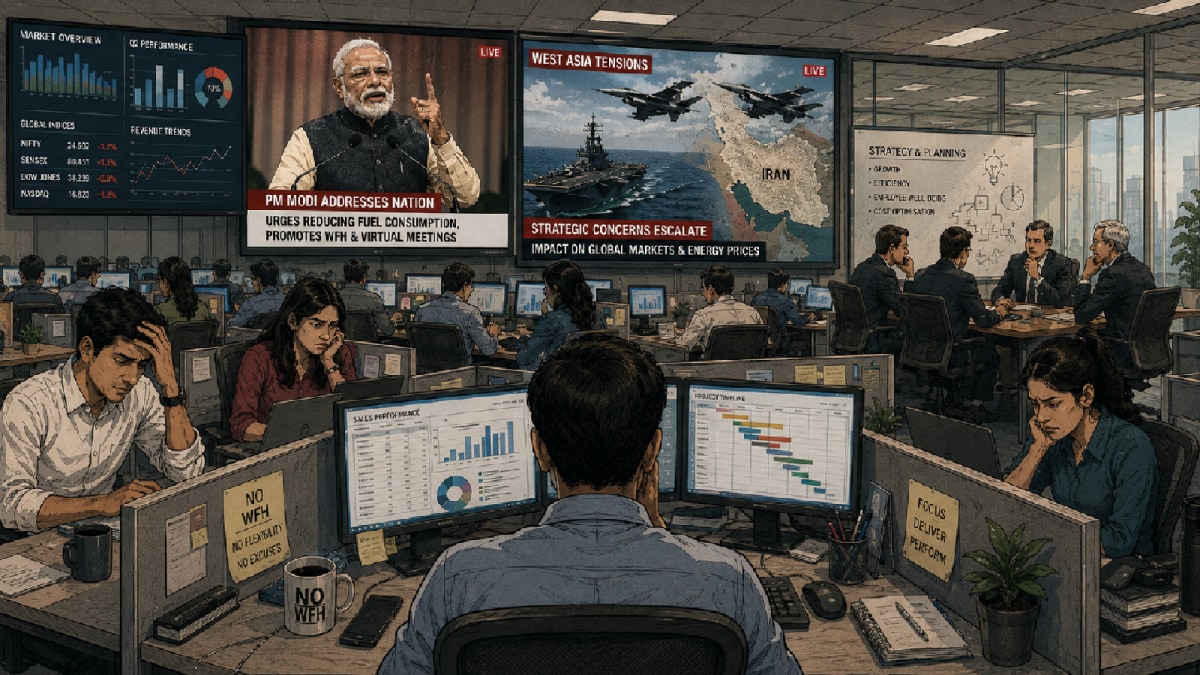
PM Modi's appeal on May 10 emphasized putting the nation first as India faces economic pressures from global fuel prices. Social media users strongly reacted to his appeals for resource conservation, work-from-home practices, and reduced fuel consumption.
 Prime Minister Narendra Modi addressing a public meeting in Hyderabad, Telangana, on 10 May 2026.(PTI)
Prime Minister Narendra Modi made striking appeals to citizens on 10 May, urging citizens to place “nation first above personal comfort” while addressing a gathering in Hyderabad. As India grapples with the economic fallout of West Asia conflict and rising global fuel prices, these appeals triggered strong rection on social media
From urging the public to exercise restraint, conserve resources, revive work-from-home culture and postpone unnecessary foreign travel to request for reinstatement of habits seen during the Covid-19 pandemic, PM Modi sought collective public participation. While warning about the ongoing crisis, PM Modi highlighted a series of measures aimed at reducing India’s dependence on imported fuel and shielding the economy from global disruptions. Stressing the need for focus on Make in India for stronger nation, he emphasized for a more self-reliant during uncertain times.
PM Modi’s 7 Appeals at a glance
1. Revive work from home: Urging offices and businesses to bring back work-from-home practices wherever possible to bring down fuel demand and hence consumption.
People also ask
AI powered insights from this story
PM Modi urged citizens to revive work-from-home practices to reduce fuel demand and consumption. This measure was suggested as part of collective public participation to shield the economy from global disruptions, particularly the West Asia crisis and rising fuel prices.
PM Modi appealed to citizens to use petrol and diesel with restraint, prefer public transport and metro travel, adopt carpooling, and shift to EVs and rail transport. He also suggested reviving work-from-home and postponing non-essential foreign travel.
PM Modi suggested avoiding non-essential gold purchases to save foreign exchange reserves. This measure is part of a broader effort to strengthen the economy and reduce India's dependence on imports during uncertain global times.
Rising crude oil prices, exacerbated by the West Asia conflict, increase India's import bill and can widen the current account deficit. A 10% increase in crude prices could push up inflation by 50 basis points and pare economic growth by 15 basis points.
Netizens had mixed reactions, with some questioning government accountability and others suggesting alternative economic measures. The Congress party criticized PM Modi, stating he was clueless about energy security and was pushing citizens into inconvenience instead of building contingencies.
2. Use petrol and diesel “with restraint”: Amid volatility in crude oil prices, PM Modi appealed to citizens to reduce unnecessary usage of petrol, diesel and gas.
3. Prefer public transport and metro travel over private vehicles: According to PM Modi, India's massive foreign exchange reserves can be saved if individuals cut down on their fuel consumption.
4. Adopt carpooling: PM Modi asked citizens to embrace carpooling as he emphasized the role of shared travel towards national economic stability during a global crisis.
5. Delay non-essential foreign travel
6. Avoid unnecessary gold purchases
7. Shift to EVs and rail transport
View full Image
Social media reaction
A user wrote, “Reverse Capital gains tax and see Dollars flowing in.. Difficult times need Smart measures..”
Another user remarked, “Citizens are asked to sacrifice, but where is govt accountability? With inflation, EMIs, fuel prices and job uncertainty, should nation building mean only common people keep adjusting?”
A third comment read, “Sir FII sales is largely on account of government policies. Last year FII sales exceeded that of gold imports and again same story this year. One of the key reasons for INR depreciation.”
A fourth user stated, "Every appeal asks citizens to become more serious because seriousness is easier to govern. Notice how inner chaos gets renamed duty. Then the podium starts speaking from inside your own chest."
A fifth user questioned, “@narendramodi certainly you asked people not to buy gold jewellery for 1year, but what about for more then 4million people who are employed in gold jewellery sector?”
A sixth user said, "At what point will these emotionally charged appeals be exposed for what they are? Sheer incompetency! I agree on some of the points, but it must always be a choice not an obligation. Did you not assure us that we will face no problems? Cut to results, the tone has shifted!!"
A seventh user wrote, “Seems like the bubble is about to burst the harsh reality which was hidden from so many weeks is about to create havoc.”
An eighth user replied, “This is not some emotional appeal. It is calculated move. Brace up. It’s precursor to steep increase in Diesel, Petrol prices. Wait for a day or two…”
About the Author
Fareha Naaz
Fareha Naaz is a Delhi-based journalist and Content Producer at LiveMint, where she has built nearly three years of experience in digital journalism. She covers a diverse range of topics, including national news, education, entertainment, lifestyle trends science, global health and international news.<br><br> With a background in Economics and Education, she focuses on providing insightful, thoroughly researched coverage that bridges the gap between breaking news and in-depth analysis. In addition to breaking copies, legal and political news, her reporting blends editorial rigour with search-driven storytelling. With a keen eye-on-global events, she provides insightful coverage on latest developments. Her reporting combines editorial rigour with in-depth coverage and search-driven storytelling provide valuable insight and context to readers, ensuring accuracy and relevance.<br><br> Her newsroom experience helped her in combining her critical thinking skills with real-time editorial decision-making. Over the years, she has been presenting complex stories with clarity for a digital-first audience amid fast-paced news cycles. Her thoroughly researched stories, with well-structured and engaging content, provide readers with clear understanding of the context and background.<br><br> Fareha holds a Master’s degree in Economics, in addition to a Bachelor of Education degree.<br><br> When not in the newsroom, she enjoys painting and sports, reading books and current developments.



 English (US) ·