
 (6).png) 1 hour ago
1
1 hour ago
1
ARTICLE AD BOX
Russian President Vladimir Putin said the Russia-Ukraine war may be nearing an end after Victory Day celebrations, while expressing willingness to negotiate future European security arrangements. His remarks came amid ongoing conflict, diplomatic tensions, and a proposed temporary ceasefire.
 Russian President Vladimir Putin says war in Ukraine might be nearing an end(AFP)
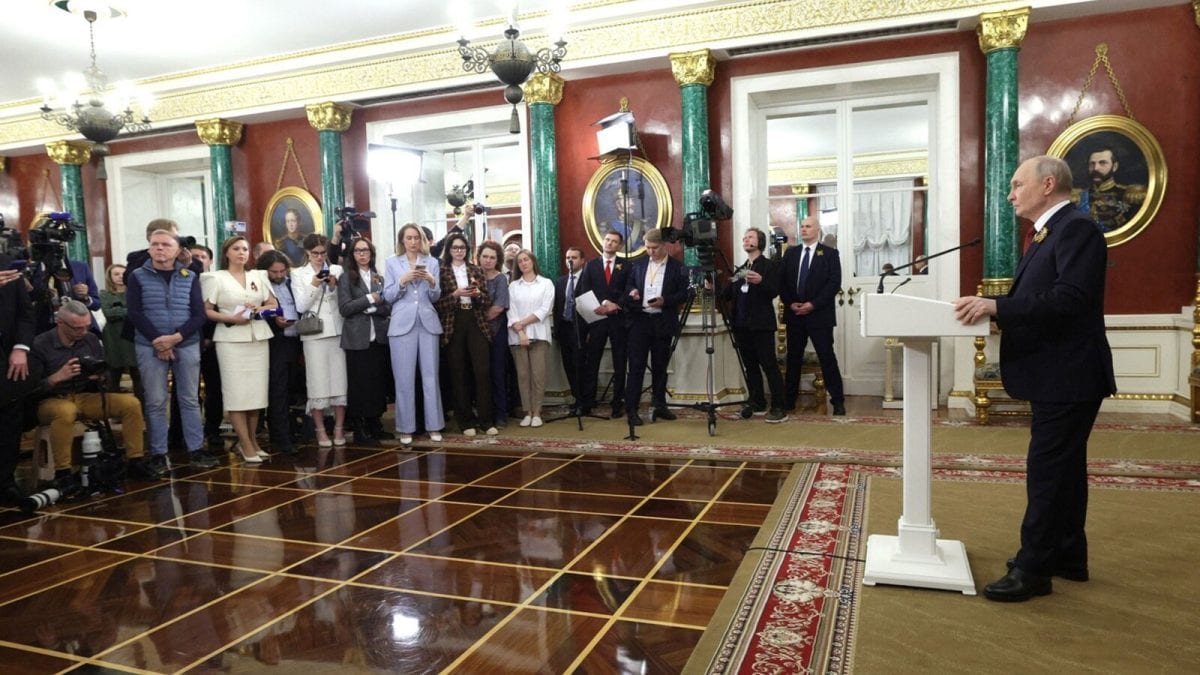
Russian President Vladimir Putin on Saturday (local time) said that he thought the Ukraine war was coming to an end, remarks that came just hours after he had vowed victory in Ukraine at Moscow's most scaled-back Victory Day parade in years.
Speaking to reporters, Putin said, "I think that the matter is coming to an end," and added that he would be willing to negotiate new security arrangements for Europe, and that his preferred negotiating partner would be Germany's former Chancellor Gerhard Schroeder, Reuters reported.
The Russian President was speaking in the Kremlin after setting out his view of the causes of the Ukraine war, which Moscow launched in February 2022. Blaming "globalist" Western leaders, Putin said they promised the North Atlantic Treaty Organization (NATO) would not expand eastward after the 1989 fall of the Berlin Wall, but then tried to draw Ukraine into the European Union's orbit.
His remarks came just hours after the parade on the May 9 national holiday celebrating the Soviet Union's victory over Nazi Germany in World War II. The annual event pays homage to the 27 million Soviet citizens who perished in that war.
Russia's Victory Day celebrations
Following the parade, Putin told reporters that US President Donald Trump offered to broker a ceasefire after Moscow informed the US and others that it would launch a massive strike on central Kyiv, a move that carried a high risk of collateral damage if Ukraine attempted to disrupt Saturday’s festivities.
Quoting Putin, AP reported, "We just described the situation to our friends, colleagues and partners: We don't have any intention to exacerbate or worsen relations with anyone, but it could happen because all control and decision-making centers in Kyiv are located close to diplomatic missions." He added, "When we started such a dialogue with the U.S. administration, we warned them about this, pointed out the possible consequences, and asked them to do everything necessary to ensure the security of their diplomatic mission.”
He further noted that Moscow welcomed the US President's offer to broker a ceasefire, which was driven by humanitarian motives and “respect for our common victory over Nazism.”
The Russian President added that he could meet Zelenskyy when a peace deal is ready for signing.
On Friday, Trump announced a three-day ceasefire between Russia and Ukraine, citing Victory Day celebrations.
Trump announces three-day ceasefire
In a Truth Social post on Friday, Trump announced a three-day ceasefire between Moscow and Kyiv and wrote, "I am pleased to announce that there will be a THREE DAY CEASEFIRE (May 9th, 10th, and 11th) in the War between Russia and Ukraine. The Celebration in Russia is for Victory Day, but likewise, in Ukraine, because they were also a big part and factor of World War II."
He added, "This Ceasefire will include a suspension of all kinetic activity, and also a prison swap of 1,000 prisoners from each Country. This request was made directly by me, and I very much appreciate its agreement by President Vladimir Putin and President Volodymyr Zelenskyy. Hopefully, it is the beginning of the end of a very long, deadly, and hard-fought War. Talks are continuing on ending this Major Conflict, the biggest since World War II, and we are getting closer and closer every day."
Russia-Ukraine war
Russian troops have been fighting in Ukraine for over four years now, which is longer than Soviet forces fought in World War II, known in Russia as the Great Patriotic War of 1941-45.
So far, Russian forces haven't succeeded in taking the whole of the Donbas region of eastern Ukraine, where Kyiv's forces have been pushed back to a line of fortress cities. Russian advances have slowed this year, though Moscow controls just under one-fifth of Ukrainian territory.
Putin, who has ruled Moscow either as president or prime minister since the last day of 1999, is now facing a wave of anxiety in the country about the ongoing war in Kyiv, which has killed hundreds of thousands of people, left swathes of Ukraine in ruins, and drained Russia's $3 trillion economy.
Key Takeaways
- Putin's statements suggest a potential shift in the Ukraine conflict's trajectory.
- A three-day ceasefire proposed by Trump could pave the way for further negotiations.
- The ongoing war has significantly impacted both nations, raising questions about future security arrangements in Europe.
About the Author
Swati Gandhi
Swati Gandhi is a digital journalist with over four years of experience, specialising in international and geopolitical issues. Her work focuses on foreign policy, global power shifts, and the political and economic forces shaping international relations, with a particular emphasis on how global developments affect India. She approaches journalism with a strong belief in context-driven reporting, aiming to break down complex global events into clear, accessible narratives for a wide readership.<br><br> Previously, Swati has worked at Business Standard, where she covered a range of beats including national affairs, politics, and business. This diverse newsroom experience helped her build a strong grounding in reporting, while also strengthening her ability to work across both breaking news and in-depth explanatory stories. Covering multiple beats early in her career has helped her be informed about her current work, allowing her to connect domestic developments with wider international trends.<br><br> At Live Mint, she focuses on international and geopolitical issues through a business and economic lens, examining how global political developments, foreign policy decisions, and power shifts impact markets, industries, and India’s strategic and economic interests.<br><br> She holds a Bachelor’s degree in English (Honours) from the University of Delhi and a Master’s degree in Journalism and Mass Communication from Guru Gobind Singh Indraprastha University. Her academic training has shaped her emphasis on precision, analytical rigour, and clarity in writing. Her interests include global political economy and the intersection of geopolitics with business.<br><br> Outside work, Swati focuses on exploring her passion and love for food. From fancy cafes to street spots, Swati explores food like a true foodie.




 English (US) ·