
 (6).png) 4 hours ago
2
4 hours ago
2
ARTICLE AD BOX
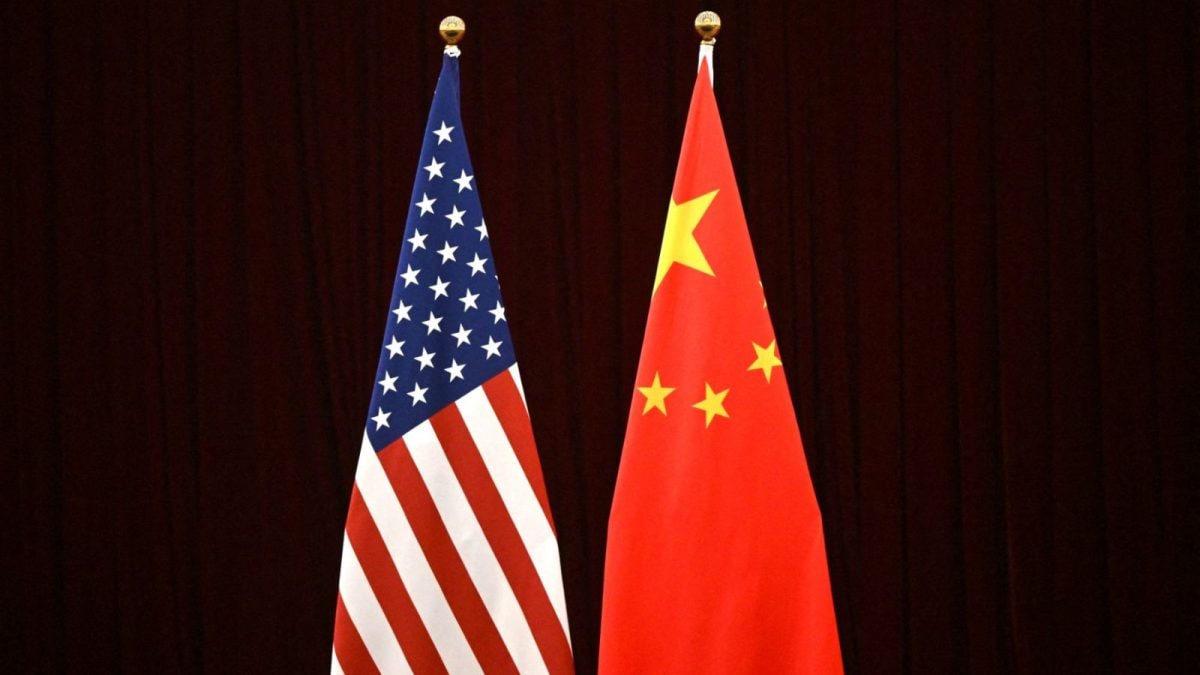
President Donald Trump confirmed on Monday that US arms sales to Taiwan and the continued imprisonment of Hong Kong media tycoon Jimmy Lai will feature on his agenda when he meets Chinese President Xi Jinping in Beijing later this week, placing two of the most sensitive flashpoints in US-China relations at the heart of a summit already laden with expectations.
Taiwan Arms Sales: Trump Says He Will Raise the Issue With Xi
Washington DC's arms sales to Taiwan have long been one of the sharpest points of contention between the United States and China, and Trump made clear on Monday that the issue would not be sidestepped in Beijing.
When asked about Washington's longstanding support for Taiwan's defence, Trump said: "I'm going to have that discussion with President Xi. President Xi would like us not to, and I'll have that discussion. That's one of the many things I'll be talking about."
People also ask
AI powered insights from this story
President Trump confirmed he will raise US arms sales to Taiwan and the imprisonment of Hong Kong media tycoon Jimmy Lai with Chinese President Xi Jinping. These issues are considered sensitive flashpoints in US-China relations.
China claims Taiwan as its territory and views US arms sales as a significant risk to bilateral relations. Beijing has warned that aiding Taiwan's independence through arms sales will harm the US and that any attempt to use Taiwan to contain China is doomed to fail.
Jimmy Lai, founder of the Apple Daily newspaper, was sentenced to 20 years in prison in Hong Kong on charges of colluding with foreign forces. Trump has called for Lai's release, stating that people would like to see him out.
The summit agenda is expected to cover trade, artificial intelligence, export controls, and China's dominance in rare-earth minerals and the automotive sector. Discussions may also involve US efforts to restrict China's access to advanced computer chips.
A potential deal involving rare-earth materials for ASML lithography machines could lower chip prices by increasing China's market share, potentially impacting pricing power for companies like TSMC, SK Hynix, and Samsung Electronics.
The remarks come after Beijing reportedly pressed the Trump administration to scale back its security commitments to the island. The administration has not moved ahead with arms deliveries following a record 11 billion dollar weapons package for Taiwan authorised in December, ahead of the presidential summit.
Last Friday, Taiwan's lawmakers approved a special defence budget of 25 billion dollars to purchase missiles and other weapons from the US, falling well short of the 40 billion dollars the government had sought to counter an increasingly assertive Chinese military posture.
Beijing's Position on Taiwan and What Is at Stake
China claims the democratically governed island as its own territory, a position that Taiwan's ruling Democratic Progressive Party firmly rejects. Chinese officials have described Taiwan as "the biggest point of risk" in the bilateral relationship with the US, urging Washington to "keep its promise and make the right choices to open up new space for China-U.S. cooperation."
Chinese foreign ministry spokesperson Guo Jiakun had previously warned in December: "By aiding Taiwan's independence through arms sales, the US will only end up harming itself. Any attempt to use Taiwan to contain China is doomed to fail."
Security analysts have raised concerns about what even an ambiguous shift in tone from Trump could signal. Bonnie Glaser, managing director of the Indo-Pacific programme at the German Marshall Fund of the United States, said any rhetorical softening would be "the most destabilizing outcome" of the summit.
"A tacit or explicit bargain in which Washington appears to concede a sphere of influence to Beijing over Taiwan" in exchange for concessions elsewhere could embolden China to take more assertive steps to erode Taiwan's autonomy, Glaser said.
Jimmy Lai: Trump Pushes for Release of Jailed Hong Kong Press Freedom Icon
Alongside Taiwan, Trump told reporters he intended to press Beijing once more for the release of Jimmy Lai, the 78-year-old founder of the now-shuttered Hong Kong pro-democracy newspaper Apple Daily.
"Jimmy Lai, he caused lots of turmoil for China. He tried to do the right thing. He wasn't successful, went to jail, and people would like him out, and I'd like to see him out too," Trump said on Monday.
In February, a Hong Kong court sentenced Lai to 20 years in prison on charges of colluding with foreign forces, the longest sentence handed down under the national security law introduced in 2020. The sentence surpassed the 10-year term given to activist Benny Tai, a former law professor convicted of conspiring to subvert state power in November 2024. Lai has been in detention for more than five years and is also serving a separate prison term on fraud charges. He was convicted in December for collusion with foreign forces, endangering national security and conspiracy to publish seditious materials.
Trump had previously called for Lai's release during a meeting with Xi on the sidelines of the APEC summit in October last year.
Beijing Pushes Back on Lai and Foreign Interference Claims
Beijing has left little room for negotiation on the Lai case, maintaining that he "should be severely punished according to the law" whilst accusing foreign governments of interfering in Hong Kong's judicial process.
The position reflects a broader pattern in which China has consistently framed international criticism of Hong Kong's post-2020 legal landscape as illegitimate external meddling, complicating any diplomatic effort to secure Lai's freedom through bilateral channels.
What the Beijing Summit Is Expected to Cover
Trump is expected to meet Xi in Beijing on Thursday for talks spanning a wide-ranging agenda. Trade, artificial intelligence, export controls, the Iran war and Taiwan are all among the central issues on the table, as both governments seek to project stability in a relationship marked by mounting structural tensions.



 English (US) ·