
 6 hours ago
1
6 hours ago
1
ARTICLE AD BOX
Last Updated:April 24, 2026, 14:07 IST
US, Iran seize ships in Hormuz: What happens to the ships after they are taken? What happens to the crew on board? Which ship was held for the longest time? News18 explains


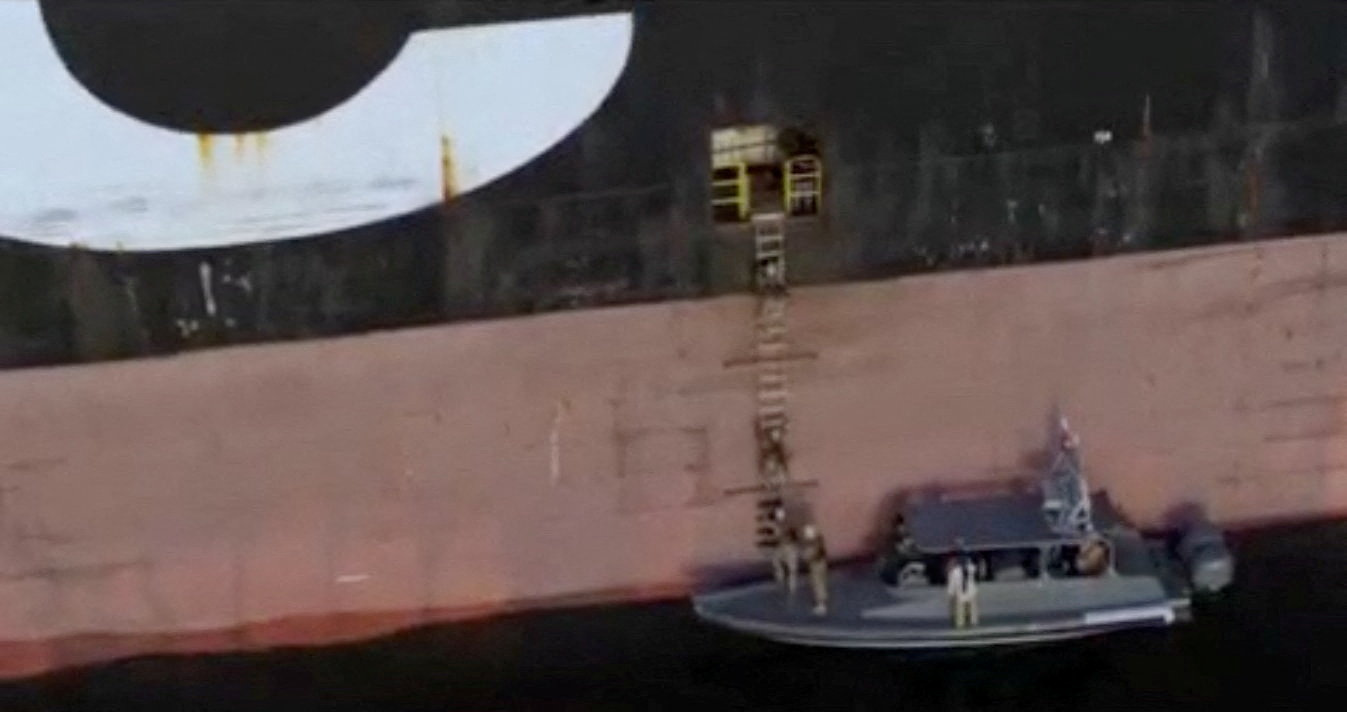
A screen capture from a video said to show the seizure of the container ships MSC Francesca and Epaminondas in the Strait of Hormuz, broadcast on Iranian State TV. (Reuters)
Amid the US-Iran conflict, the Strait of Hormuz has become one of the most dangerous sea routes in the world. While Iran has closed it, the US has blockaded it. Both countries have seized several ships and tankers from other nations.
But what happens to these ships after they are taken? And what happens to the crew members on board?
US, Iran both taking control of ships
The latest reports say the US has seized two Iranian oil tankers, while Iran has also taken at least two or three ships. However, both countries have intercepted and sent back several ships.
What happens next?
When a ship is stopped or seized, this is what usually happens, according to News18 Hindi and other reports:
Taken to port: The ship is surrounded by small boats and taken to a port, often held at a port under legal custody. For example, Iran takes seized ships to its Bandar Abbas port. The ship’s documents, cargo, and crew are checked. Sometimes the oil or goods are confiscated, and in some cases, the government sells the oil to make money. The ship becomes a bargaining tool, and the ship and its crew often become part of diplomatic pressure.
Lights Out, Head Strait: How Iran’s 2 Tankers Sneaked Past US Naval Blockade Of Hormuz Explained
Stopped at sea: Not every ship is taken to port, sometimes they are stopped at sea. In that case, the main engine is turned off, but smaller engines are kept running to maintain electricity and other systems. Since the crew stays on board and big ships are like small cities, water, food, air conditioning, and power systems keep running with these small engines. Usually, ships have enough food and supplies for at least a month. If a ship is held for a long time, supply boats bring food, water, medicine, and fuel. Sometimes fresh food is also sent. The crew is given limited freedom. They can move around on the ship but are not allowed to leave. Sometimes their passports are taken.
The law: If a ship is stuck for a long time, the crew feels more stress, uncertainty, and fear. Such cases usually fall under United Nations maritime law, and there must be strong legal reasons to stop a ship. But in sensitive areas like Hormuz, these rules are often ignored.
What US, Iran are doing?
From 2019 to 2023, Iran seized several oil tankers, and the US and its allies also stopped some ships.
The US is targeting Iranian-flagged ships, especially those trying to break the blockade. The US Navy takes control of them. Most ships are sent back and ordered to turn around or change course. Some are taken elsewhere and held but not seized.
In serious cases, the ship is seized, its engine is turned off, and US Marines take control. These ships are either stopped at sea or kept under US military control in nearby waters.
Which ship was stuck for the longest time?
The ship that was stuck the longest was the MV Rhosus, which was stopped at Beirut port in 2013 with 2,750 tons of ammonium nitrate. It was stuck there for seven years and eventually became unusable. Other ships are usually held for only a few months.
What had happened?
The MV Rhosus was a Japanese-built general cargo ship that became the focal point of a global tragedy after its abandoned cargo led to the 2020 Beirut explosion. Originally launched in 1986 by Tokuoka Zosen for a Japanese shipping firm, the aging vessel was later converted to transport vast consignments across the world. In September 2013, the Moldovan-flagged ship departed from Batumi, Georgia, carrying 2,750 tonnes of high-density ammonium nitrate destined for an explosives factory in Mozambique, said reports.
The ship’s journey was plagued by technical failures and financial issues. According to its former master, Captain Boris Prokoshev, the Rhosus made an unscheduled stop in Beirut in November 2013 because its owner, Russian businessman Igor Grechushkin, lacked the funds to pay Suez Canal tolls. Grechushkin attempted to load additional heavy machinery to raise money, but the equipment proved too heavy for the ship’s weakened deck. Lebanese port authorities subsequently impounded the vessel after an inspection revealed severe unseaworthiness, including hull corrosion and lack of auxiliary power.
Following its detention, the ship was effectively abandoned by its owner, leaving the crew stranded and the cargo unsecured. Four crew members, including Captain Prokoshev, were forced to remain on what they described as a “floating bomb" for nearly a year while legal disputes over unpaid port fees and salaries continued. In 2014, a Lebanese court ordered the ammonium nitrate to be moved from the vessel to Warehouse 12 at the Port of Beirut for safe storage. Neglected and continuing to deteriorate, the Rhosus eventually sank behind a breakwater in February 2018.
The legacy of the MV Rhosus culminated in a catastrophic disaster on 4 August 2020, when the improperly stored chemicals ignited, causing one of the largest non-nuclear explosions in history. This event has led to a long-running international legal pursuit of those responsible for the shipment. In September 2025, Igor Grechushkin was arrested in Sofia, Bulgaria, following an Interpol red notice, and as of late 2025, he was reportedly in Cyprus awaiting potential extradition to Lebanonm say reports.
KEY FAQs
What happens after a ship is seized?
It’s boarded, taken to the seizing country’s waters/port, and inspected for legal or security violations.
What happens to the crew?
Crew are usually detained but kept safe onboard or ashore; governments and shipowners seek access and release.
How do such incidents end?
Through diplomatic talks, legal claims, or swaps—often taking days to weeks depending on tensions.
With agency inputs
Handpicked stories, in your inbox
A newsletter with the best of our journalism
First Published:
April 24, 2026, 14:05 IST
News explainers US, Iran Are Seizing Ships In Hormuz, But What Actually Happens To The Crew After That?
Disclaimer: Comments reflect users’ views, not News18’s. Please keep discussions respectful and constructive. Abusive, defamatory, or illegal comments will be removed. News18 may disable any comment at its discretion. By posting, you agree to our Terms of Use and Privacy Policy.
Read More





 English (US) ·