
 (6).png) 1 hour ago
1
1 hour ago
1
ARTICLE AD BOX
Israel on Tuesday said that it has killed Gholamreza Soleimani, a senior officer in the Islamic Revolutionary Guard Corps (IRGC), who commands the Basij force. The IDF also claimed that Ali Larijani, secretary of Iran’s Supreme National Security Council, has been killed. Iran is yet to respond.

Israeli Defense Forces (IDF) on Tuesday (local time) claimed that it had killed Iran's Gholamreza Soleimani, the commander of the Basij unit, which is the internal security paramilitary militia of the country's Islamic Revolutionary Guard Corps (IRGC).
In a post on X, IDF wrote, "COMMANDER OF THE BASIJ UNIT ELIMINATED. Yesterday, the IDF targeted & eliminated Gholamreza Soleimani, who operated as commander of the Basij unit for the past 6 years. Under Soleimani, the Basij unit led the main repression operations in Iran, employing severe violence, widespread arrests, and the use of force against civilian demonstrators."
However, Iran has not yet commented on the IDF's claim.
All you need to know about Basij and Gholamreza Soleimani
According to an AP report, the US Treasury records show Soleimani's birth year as 1965. He has been sanctioned by the United States, the European Union, and other countries for his alleged involvement in suppressing dissent through the Basij unit.
According to an Al Jazeera report, the Basij is a volunteer paramilitary force under the IRGC, which was established after the 1979 revolution. Basij was tasked with enforcing internal security countrywide. This voluntary paramilitary unit is responsible for operating local branches across Iranian cities and is also deployed on the front lines of protests to enforce crackdowns. This includes the anti-government demonstrations that erupted across Iran in January, in which thousands were reportedly killed, as well as the 2009 mass protests, when opponents claimed the presidential election had been rigged.
Israel targets Ali Larijani
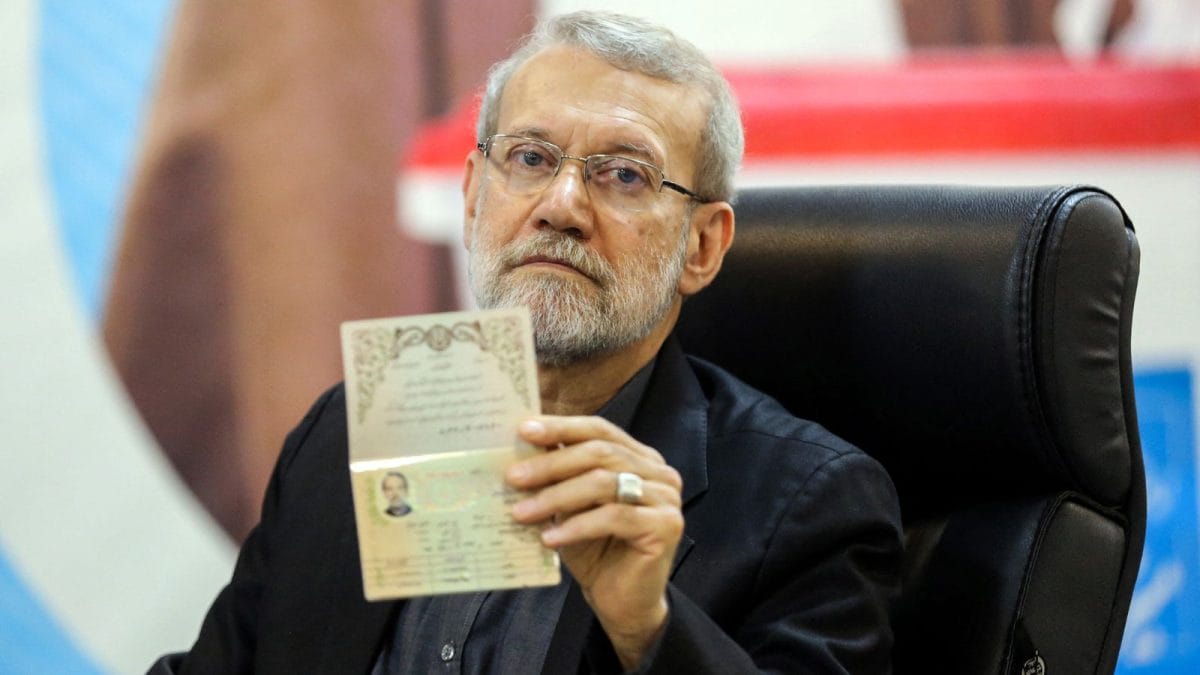
Israel's Defence Minister, Israel Katz, said the IDF has also killed Ali Larijani, secretary of Iran’s Supreme National Security Council, along with Soleimani. While a confirmation from Tehran is awaited on whether the two leaders are alive or not, their killings would strip Tehran of important leaders as the Islamic Republic faces its greatest test in recent decades.
After Israel killed Supreme Leader Ayatollah Ali Khamenei in an airstrike on the first day of the war, Larijani was considered to be one of the most powerful figures in the country.
According to an AP report, Larijani hails from one of Iran's most influential and famous political families. He was a former parliamentary speaker and a senior policy advisor, who was appointed to advise Khamenei on strategy in nuclear talks with the Trump administration. He was sanctioned by the US Treasury earlier in January this year after Tehran violently suppressed nationwide protests. Larijani was identified as being "responsible for coordinating the response to the protests on behalf of the supreme leader of Iran".
The killing of these two leaders is likely to mark an escalation of the conflict in the Middle East.
No end in sight to US-Iran conflict
The US and Israel launched strikes against Iran on 28 February, targeting its key naval and military forces. The move, which came days after the third round of talks between Washington and Tehran concluded over the latter's nuclear programme. The strikes prompted Tehran to retaliate, which has targeted US military installations in the Gulf region, plunging the region into a wider military confrontation.
According to an AP report, Iran on Tuesday hit a tanker anchored off the coast of Fujairah, making it one of the 20 vessels struck since the war began. Iran's decision to consistently attack the Gulf nations and its tight grip on the Strait of Hormuz, which is responsible for 20% of the world's oil supply, has now given rise to growing concerns of a global energy crisis.
(With agency inputs)
About the Author
Swati Gandhi
Swati Gandhi is a digital journalist with over four years of experience, specialising in international and geopolitical issues. Her work focuses on fo...Read More






 English (US) ·