
 (6).png) 16 hours ago
2
16 hours ago
2
ARTICLE AD BOX
Pope Leo XIV called for U.S.-Iran negotiations to end the war and condemned capital punishment. He emphasised the importance of treating migrants with dignity and criticised the focus on sexual morality over broader issues like justice and equality.
 Pope Leo XIV greet children at the end of the Angelus prayer in Castel Gandolfo, Italy, Friday, Aug.15, 2025. (Angelo Carconi/Pool Via AP)(ASSOCIATED PRESS)
Pope Leo XIV urged the United States and Iran to restart negotiations to bring an end to the conflict, speaking during a press conference on Thursday as he returned from Africa. He also emphasised that while countries have the right to protect their borders, migrants should be treated with dignity and not in an inhumane manner, as reported by Associated Press.
On migration and the rights of states
Leo affirmed the right of countries to impose immigration controls on their borders and acknowledged that uncontrolled migration had created situations “that are sometimes more unjust in the place where they arrive than from where they left."
“I personally believe that a state has the right to impose rules for its frontiers,” he said. “But saying this, I ask: ‘What are we doing in the wealthier countries to change the situation in poorer countries’ to provide opportunities so that people aren’t compelled to leave?”
Regardless, he said migrants are human beings and deserve to be respected in their human dignity and not be treated “worse than house pets, animals.”
What did Pope say about the Iran war?
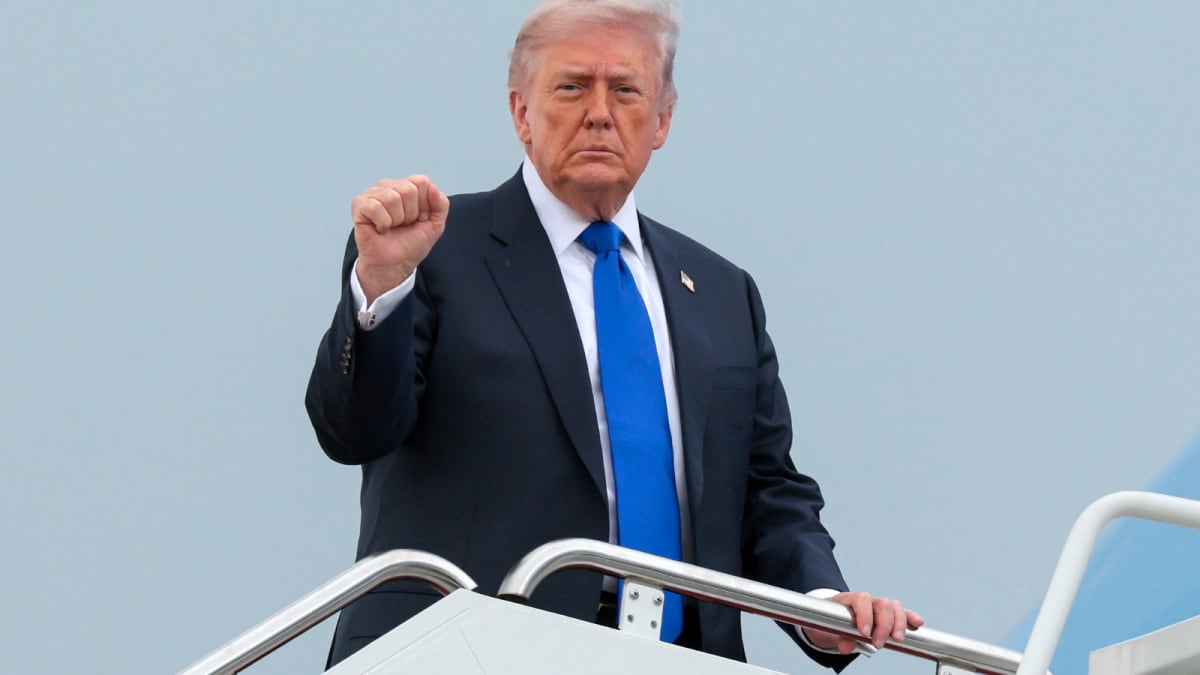
After a trip that was dominated by the very public back and forth between Leo and U.S. President Donald Trump over the war, Leo urged the United States and Iran to return to negotiations.
He called for a new “culture of peace” to replace the recourse to violence whenever conflicts arise.
He said the question wasn’t whether the Iranian regime should change or not. “The question should be about how to promote the values we believe in without the deaths of so many innocents.” He said the question wasn’t whether the Iran regime should change or not. “The question should be about how to promote the values we believe in without the deaths of so many innocents.”
He revealed that he carries with him the photo of a Muslim Lebanese boy who had been killed in Israel’s recent war with Hezbollah. The boy had been photographed holding a sign welcoming the pope when he visited Lebanon last year.
“As a pastor I cannot be in favor of war,” he told reporters aboard his plane. “I would like to encourage everyone to find responses that come from a culture of peace and not hatred and division.”
A pope who keeps an eye on how he’s being covered
The first pope from the United States showed a strong awareness of how his Africa visit was covered and interpreted, including reactions to his relatively restrained public remarks toward African leaders facing allegations of corruption or authoritarian rule.
With a few exceptions, Pope Leo XIV maintained a largely diplomatic tone in his comments, opting for encouragement and nuanced messaging rather than direct or attention-grabbing criticism.
He also allowed some of the circumstances of his visit to speak louder than his words: a choreographed song and dance routine by prisoners in a country known for gross human rights abuses, or the extravagant luxury of a president’s hometown in a country where more than half the population lives in poverty.
Leo insisted that his primary reason for visiting Algeria, Cameroon, Angola and Equatorial Guinea was as a pastor, to accompany his flock in their faith.
Migrants are human beings and deserve to be respected in their human dignity and not be treated 'worse than house pets, animals.'
He added that the Holy See can sometimes achieve more behind the scenes via its diplomatic work, including through the release of political prisoners, than with “great proclamations criticizing, judging or condemning.”
(With inputs from agencies)
Key Takeaways
- Pope Leo XIV advocates for the humane treatment of migrants, highlighting their dignity.
- He acknowledges the right of nations to control borders while emphasizing the need for humanitarian considerations.
- The Pope calls for diplomatic efforts over military actions, promoting a culture of peace.
About the Author
Mausam Jha
Mausam Jha is a journalist who focuses on world affairs and politics. She provides clear, informative reporting with a good understanding of both global events and their local impact. <br><br> Her clear, accessible reporting on political and international issues makes her a trusted source of news and analysis. <br><br> For the past three years, Mausam has worked with Mint, covering national politics, IR—including elections—and global affairs.<br> Before joining her current role, she gained experience working with The Statesman, ANI, and Financial Express, where she honed her skills in political and international news. <br><br> She has consistently tracked key electoral battles, including US elections, Japan elections, policy debates, and strategic affairs, explaining how global currents, from great power competition to regional conflicts <br><br> Beyond journalism, Mausam has a deep engagement with international relations, diplomacy, war studies, terrorism, political history, and political theory. She is particularly interested in the intersection of statecraft and society on how governance, ideology, and institutions shape lived realities, and how politics shape today's world order. <br><br> An avid reader of classical literature and political thought, she constantly explores the connections between historical ideas and contemporary policy challenges.





 English (US) ·