
 (6).png) 3 hours ago
2
3 hours ago
2
ARTICLE AD BOX
As the United States and Iran continue to work towards a peace deal, analysts have now warned that if talks collapse, Washington could quickly target Tehran’s missile systems, naval assets, command networks, and IRGC infrastructure.
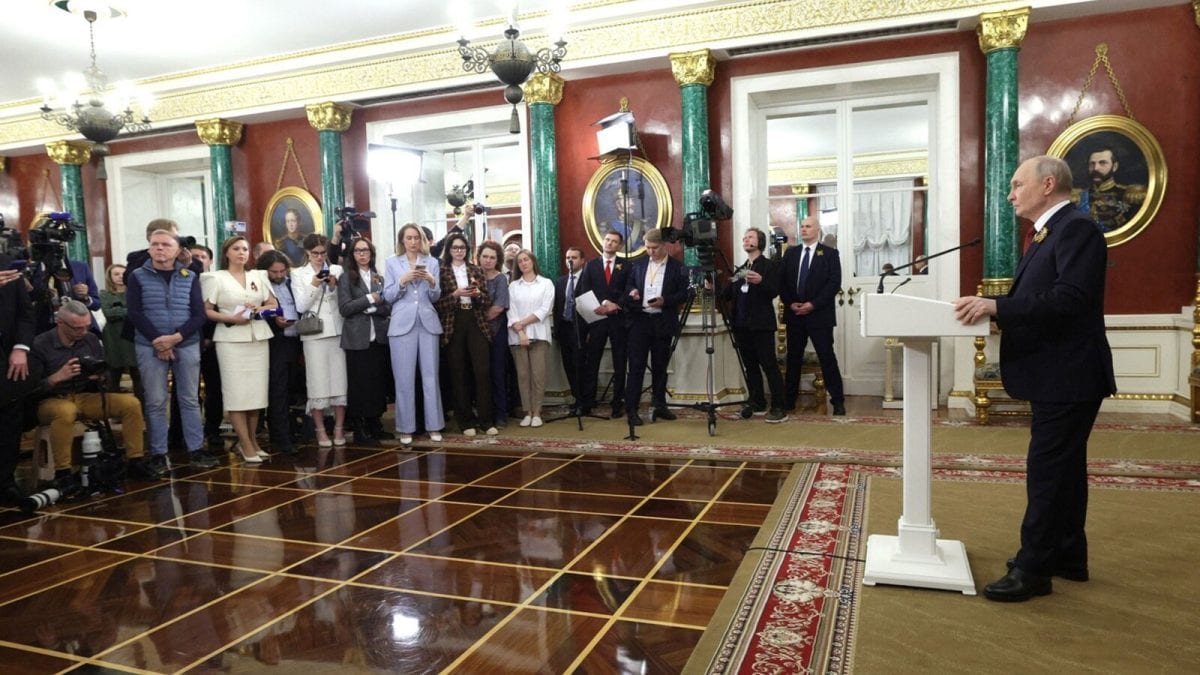
 US may target Iran to degrade its military capabilities if peace talks fail, warn analysts(AP)
As the United States and Iran continue to work towards agreeing on a framework agreement that would effectively end the war, analysts said that if talks failed, Washington would move quickly to degrade Tehran's military capabilities, Fox News reported Saturday (local time).
Retired Army Col. Seth Krummrich, a former Joint Staff planner and current Vice President at Global Guardian, added that such a campaign would first target missile systems, naval assets, and command networks before escalating to more controversial targets.
His remarks come at a time when US and Iranian negotiators are still working toward what officials call a preliminary framework agreement, essentially a one-page outline intended to serve as the foundation for broader talks focused on the Islamic Republic's nuclear programme and possible sanctions relief. However, deep mistrust between both sides has stalled the negotiations and raised concerns over what could happen if diplomacy fails.
Not starting at zero: Analyst
Krummrich said, "We’re not starting at zero," and added, "We’re both starting at minus 1,000 because neither side trusts each other at all. This is going to be a pretty hard process going forward."
Echoing Krummrich, retired Air Force Lt. Gen. David Deptula said that if talks break down, any renewed conflict is likely to become a "contest for escalation control," where Tehran would seek to impose costs without provoking regime-threatening retaliation, while Washington would work to strip away the Islamic Republic's remaining leverage.
Referring to Iran's Islamic Revolutionary Guard Corps (IRGC), Deptula said, "The capabilities that would come into focus are the ones Iran uses to generate coercive leverage: ballistic missiles, cruise missiles, air defence systems, maritime strike assets, command-and-control networks, IRGC infrastructure, proxy support channels, and nuclear-related facilities."
Iran's core military remains intact: Analysts
RP Newman, a military and terrorism analyst and Marine Corps veteran, said that the US has killed less than one per cent of IRGC troops, adding that if the talks failed, the force would still be able to carry out operations.
However, targeting the IRGC is far more complex than eliminating the country's senior leadership, according to Krummrich, who added that this is not just a group of leaders at the top that can be killed, but an organisation that, over the last 47 years, has percolated down to every level.
US-Iran peace talks hang in the balance
The remarks from analysts come at a time when US President Donald Trump has repeatedly threatened Tehran that if negotiations collapse, Washington could resume bombing the Islamic Republic, even hinting before the recent ceasefire was implemented that the US could target Tehran's energy infrastructure and key economic assets.
The developments come after US Secretary of State Marco Rubio on Friday (local time) expressed optimism that they would receive a response from Tehran regarding the latest proposal on the same day. However, the Islamic Republic only acknowledged the proposal, with its foreign ministry spokesperson stating that they are reviewing it.
Earlier on Thursday, a senior US official confirmed that American forces struck Iran’s Qeshm port and Bandar Abbas, key locations near the Strait of Hormuz, while insisting the operation did not mark a restart of the war or the end of the ceasefire. The strike on one of Tehran's oil ports came two days after the Islamic Republic launched 15 ballistic and cruise missiles at the United Arab Emirates (UAE)'s Fujairah Port, drawing anger from Gulf allies. Defence Secretary Pete Hegseth and Joint Chiefs Chairman Gen. Dan Caine said earlier this week that the attack did not rise to the level of breaking the ceasefire, describing it as a low-level strike.
Despite ongoing negotiations and a fragile ceasefire, recent military strikes and continued threats from both sides have highlighted the deep mistrust shaping US-Iran relations.
Key Takeaways
- The US and Iran's peace negotiations are heavily influenced by mutual mistrust.
- If negotiations fail, the US may target Iran's military capabilities to degrade its power.
- Military analysts highlight the complexity of targeting Iran's Islamic Revolutionary Guard Corps.
About the Author
Swati Gandhi
Swati Gandhi is a digital journalist with over four years of experience, specialising in international and geopolitical issues. Her work focuses on foreign policy, global power shifts, and the political and economic forces shaping international relations, with a particular emphasis on how global developments affect India. She approaches journalism with a strong belief in context-driven reporting, aiming to break down complex global events into clear, accessible narratives for a wide readership.<br><br> Previously, Swati has worked at Business Standard, where she covered a range of beats including national affairs, politics, and business. This diverse newsroom experience helped her build a strong grounding in reporting, while also strengthening her ability to work across both breaking news and in-depth explanatory stories. Covering multiple beats early in her career has helped her be informed about her current work, allowing her to connect domestic developments with wider international trends.<br><br> At Live Mint, she focuses on international and geopolitical issues through a business and economic lens, examining how global political developments, foreign policy decisions, and power shifts impact markets, industries, and India’s strategic and economic interests.<br><br> She holds a Bachelor’s degree in English (Honours) from the University of Delhi and a Master’s degree in Journalism and Mass Communication from Guru Gobind Singh Indraprastha University. Her academic training has shaped her emphasis on precision, analytical rigour, and clarity in writing. Her interests include global political economy and the intersection of geopolitics with business.<br><br> Outside work, Swati focuses on exploring her passion and love for food. From fancy cafes to street spots, Swati explores food like a true foodie.




 English (US) ·